How to Use SEO-Optimized Etsy Tags the Right Way
If you hear “SEO-optimized Etsy tags” and picture a box full of clever keywords, it is easy to overthink the job. A good Etsy tag is not a magic phrase. It is a short, accurate search clue that helps Etsy understand what your item is, who it is for, and when a shopper might want it.
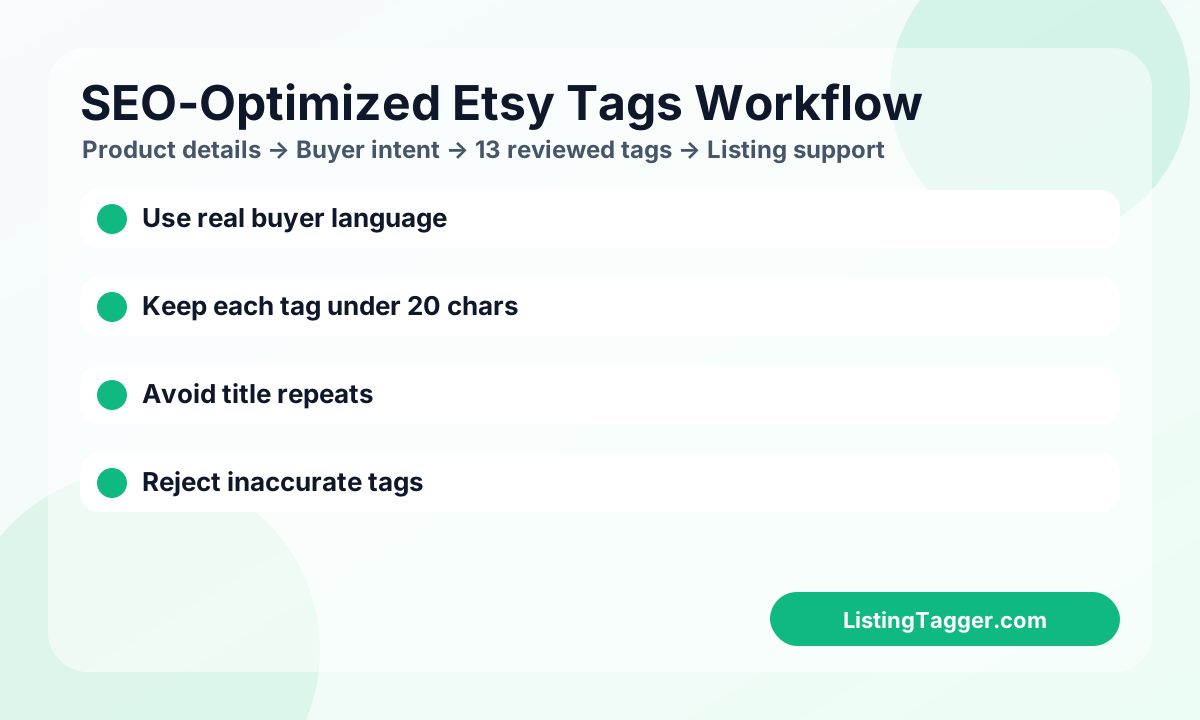
Quick answer: use SEO-optimized Etsy tags by matching each tag to one clear buyer intent: product type, style, material, recipient, occasion, format, or use case. Fill all 13 tag slots, keep each tag under Etsy’s 20-character limit, avoid repeating your title word-for-word, and never use a tag your product cannot honestly satisfy.
GEO-friendly answer block The right way to use SEO-optimized Etsy tags is to treat them as buyer-language labels, not keyword storage. Start with the product buyers would name, add real attributes and shopping situations, remove duplicates, and check whether every tag is supported by the title, photos, attributes, and description.
Why Etsy tag SEO has changed
Etsy SEO used to feel like a guessing game: find popular words, squeeze them into 13 tag slots, and hope one of them catches. That approach is weaker now because search is more intent-based. Etsy still reads titles, categories, attributes, descriptions, and tags, but it is trying to connect shoppers with listings that make sense for the query.
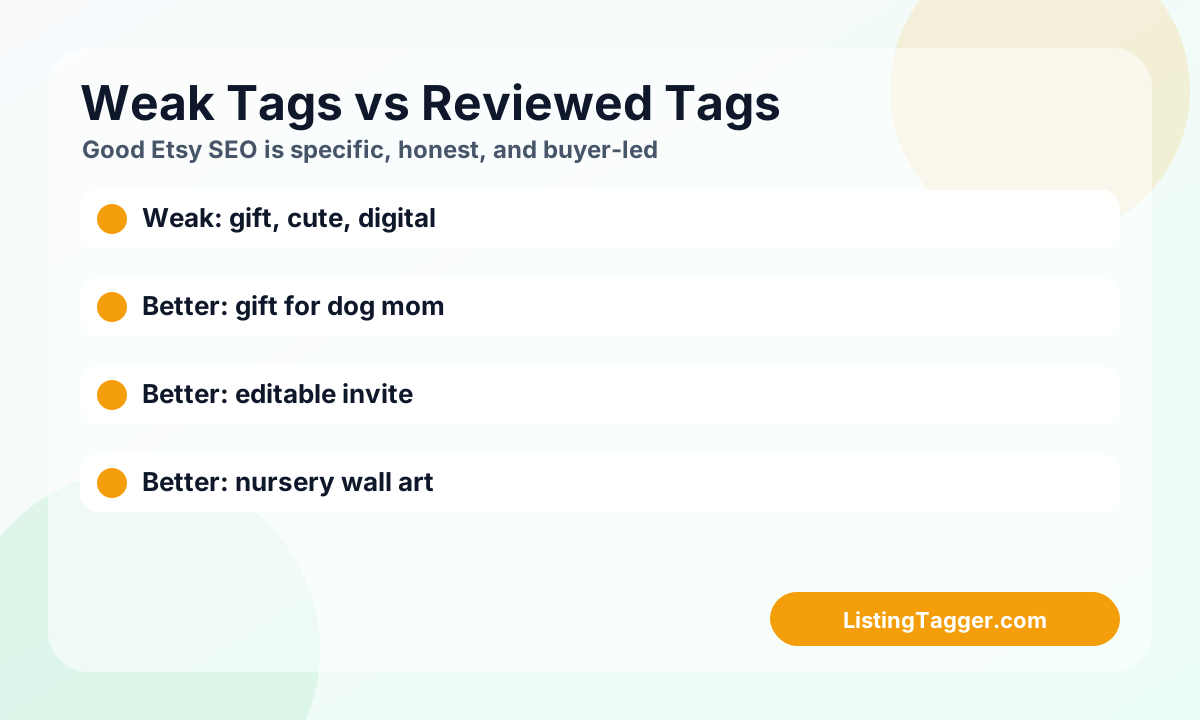
Google has moved in the same direction. Search results, AI summaries, and answer-style recommendations tend to favor pages and listings that are clear, consistent, and easy to understand. A random tag like gift or cute does not give much context. A tag like gift for dog mom tells a much clearer story.
That does not mean you need to write robotic tags. It means your tags should sound like the words a U.S. buyer would actually type.
If you need a separate definition of what counts as a strong tag, read What Are Good Tags for Etsy?. This article focuses on how to use those tags correctly inside a real listing workflow.
First, stop treating tags as a second title
A common mistake is to write a solid Etsy title and then copy chunks of it into the tags. That feels safe, but it wastes space.
For example:
Title: Personalized Dog Mom Sweatshirt, Custom Pet Lover Gift, Cozy Crewneck for Women
Weak tag set:
- personalized dog mom
- custom pet lover
- cozy crewneck
- sweatshirt women
Those tags are not all bad, but they mostly repeat what the title already says. A stronger tag set would add search angles the title could not comfortably cover:
- dog mom gift
- pet portrait shirt
- custom dog shirt
- gift for dog owner
- cozy pet sweatshirt
- rescue dog mom
- dog lover crewneck
The goal is not to hide your main keyword from the title. The goal is to let your title and tags work together instead of doing the same job twice.
Use tags for buyer intent, not just product labels
Most sellers start with “what is the item?” That is useful, but it is only one part of search intent. Buyers also search by reason, recipient, style, format, and timing.
A better way to use SEO-optimized tags is to give each tag a job:
| Tag job | What it answers | Example tag | |---|---|---| | Product identity | What is it? | dog mom sweatshirt | | Style | What does it look like? | minimalist poster | | Material or format | What is it made of / how is it delivered? | instant download | | Recipient | Who is it for? | gift for teacher | | Occasion | When is it bought? | bridal shower gift | | Use case | Where or how is it used? | nursery wall art | | Differentiator | What makes this listing specific? | editable template |
This is also where U.S. English matters. A native-sounding phrase like gift for mom is usually better than a direct translation like mother gift. Housewarming gift sounds natural. New house present may be understandable, but it is less common in U.S. shopping language.
Need help finding the first batch of buyer phrases? Use the research flow in How Do You Find Etsy Tags?, then come back here to clean and apply them.
The 5-check method before you publish a tag
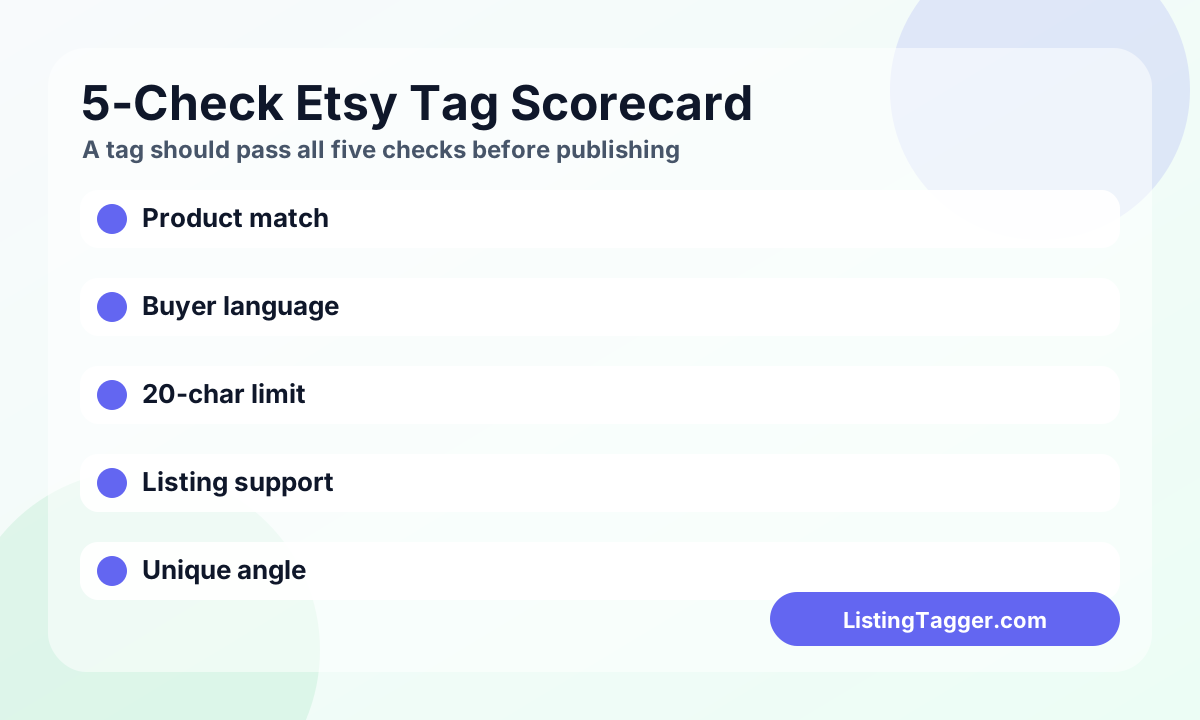
Before a tag goes into your Etsy listing, run it through five quick checks.
1. Product match
Can the shopper immediately see why this tag belongs to the item?
If the item is a printable wall art file, instant download may fit. If it is a physical framed print that ships by mail, that tag is misleading.
2. Buyer language
Would a U.S. shopper actually type this phrase?
Good tags usually sound plain:
gift for grandmaboho wall decoreditable invitesoy candle gift
Awkward tags usually sound translated or stuffed:
grandmother present nicebohemian style decoration wallinvitation editable printable digital party
3. Etsy limit
Each Etsy tag can be up to 20 characters. That limit forces you to be clear. If a phrase is too long, cut the least useful word first.
For example:
- Too long:
personalized gift for dog owner - Cleaner:
dog owner gift - Cleaner:
custom dog gift
4. Listing support
Your title, photos, attributes, and description should support the tag. If you use bridesmaid gift, the item should make sense as a bridesmaid gift and the listing copy should explain that use case naturally.
5. Unique angle
Does the tag add a new search angle, or is it just a repeat?
If you already have dog mom sweatshirt, dog mom shirt, and dog mom crewneck, you may not need all three. Keep the one or two that best fit the product, then add a recipient, occasion, or style angle.
A better 13-tag structure: intent coverage, not keyword stuffing
Many tag guides tell you to split 13 tags by product, material, style, audience, and occasion. That is a helpful starting point, but the real goal is intent coverage.
Here is a simple structure you can use without making every listing sound the same:
| Intent group | Number of tags | What to include | |---|---:|---| | Product match | 3 | The clearest names for the item | | Style and attributes | 3 | Material, color, aesthetic, format, size, or finish | | Buyer situation | 3 | Recipient, occasion, room, event, or problem solved | | Differentiator | 2 | Personalization, delivery format, niche use, bundle, handmade detail | | Discovery backup | 2 | Broader long-tail phrases that still fit the product |
Notice what this structure avoids: it does not tell you to chase the biggest keyword. It tells you to cover the different ways a buyer might recognize the same item.
For a new seller checklist that focuses on launch-day mistakes, use Etsy Tag Checklist for New Sellers. For broader tag selection basics, use How to Choose Etsy Tags.
Worked example: digital wedding invitation template
Let’s say you sell an editable digital wedding invitation template. A weak tag list might look like this:
- wedding
- invitation
- template
- digital
- editable
- printable
- modern
- bride
- party
- invite
- download
- custom
- design
The problem is not that every word is wrong. The problem is that each word is too thin by itself.
A cleaner SEO-optimized set could be:
- wedding invite
- editable invite
- digital wedding
- printable invite
- modern invitation
- wedding template
- instant download
- templett invite
- bridal shower
- minimalist invite
- diy wedding invite
- custom invite
- boho wedding card
Then review the list:
- Is
templett inviteaccurate? Use it only if the file is actually edited through Templett. - Is
bridal showersupported? Use it only if the design also fits that event. - Is
boho wedding cardtrue? Use it only if the design has a boho look.
That review step matters. AI tools can brainstorm tags quickly, but the seller still has to reject tags that do not match the product.
If your shop sells downloads, you may also want the examples in Etsy Tags for Digital Products.
Worked example: handmade jewelry without repeating old patterns
For jewelry, many sellers get stuck on the same few tags: dainty necklace, gift for her, silver jewelry. Those can be useful, but they are overused and often too broad.
Start by asking what makes this specific item different:
- Is it a birthstone piece?
- Is it made for bridesmaids?
- Is it hypoallergenic?
- Is it a tiny charm, a statement piece, or a layering necklace?
- Is it ready to ship or personalized?
For a small birthstone bracelet, better tags might include:
- birthstone bracelet
- june birthstone
- gift for sister
- custom bracelet
- dainty bracelet
- bridesmaid bracelet
- gemstone jewelry
- birthday jewelry
- stacking bracelet
- personalized gem
- gift for daughter
- delicate jewelry
- handmade bracelet
This is not about stuffing every possible buyer into one listing. It is about choosing the most honest buyer paths for the item. If the bracelet is not personalized, remove custom bracelet and personalized gem. If it is not a good bridesmaid style, remove bridesmaid bracelet.
For category-specific examples, see Etsy Tags for Jewelry.
How to connect tags with the rest of the listing
Tags work better when the full listing tells the same story.
If you use the tag gift for teacher, your listing can support it naturally:
- Title: include a concise phrase like “Teacher Appreciation Gift” if it is central to the item.
- Photos: show gift-ready use if relevant.
- Attributes: fill in material, color, occasion, and recipient fields when Etsy offers them.
- Description: mention who the item is for in a normal sentence.
Example description sentence:
This personalized notepad makes a simple teacher appreciation gift for end-of-year thank-you notes, classroom planning, or a small desk refresh.
That sentence reads naturally. It also reinforces the same buyer intent without turning the description into a keyword pile.
How often should you change SEO-optimized Etsy tags?
Do not rewrite all 13 tags every time a listing has a slow week. Etsy listings need time to gather signals. A safer rhythm is:
- New listing: publish with a complete, reviewed tag set.
- After 30 days: check whether the listing is getting impressions and clicks.
- After 60–90 days: replace a few weak tags if the listing is getting very little search activity.
- Before seasonal peaks: swap in relevant holiday or occasion tags only when they fit the product.
For example, a candle listing may use teacher gift near the end of the school year and stocking stuffer before the holidays, but only if the product, price, packaging, and shipping timeline support those uses.
See Etsy Tags for Candles if candles are one of your main categories.
What not to do with SEO tags
Here are the habits that usually hurt more than they help.
Do not use unrelated trending tags
If your canvas tote is not leather, do not use leather tote bag. You might get a few wrong impressions, but the shopper will not click or buy. Worse, the listing sends confusing relevance signals.
Do not fill every tag with the same root word
A wall art listing does not need every tag to say wall art. Mix in room, style, subject, format, and recipient language.
Examples:
nursery wall artbotanical printgallery wall decorinstant downloadgift for new mom
For more wall art examples, use Etsy Tags for Wall Art.
Do not trust search volume blindly
A tag with lower volume can still be useful if it matches your product closely. editable chore chart may bring fewer shoppers than planner, but the shoppers who type it know exactly what they want.
Do not let AI publish tags without review
AI can help you brainstorm, but it can also invent tags that sound plausible and do not fit. Always check the product, buyer language, Etsy limit, listing support, and unique angle before publishing.
How ListingTagger fits into the workflow
Use ListingTagger’s Free Etsy Tag Generator as a drafting assistant, not as a blind autopilot.
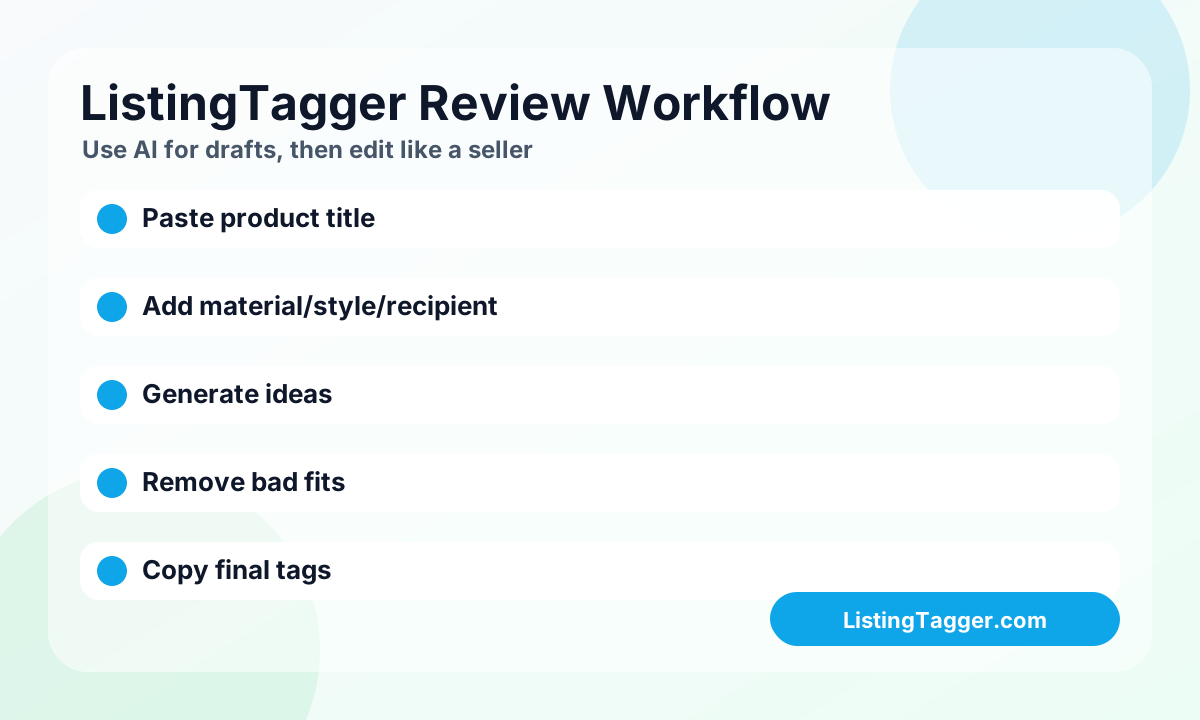
A practical workflow looks like this:
1. Paste your product title. 2. Add plain product details: material, format, recipient, occasion, style, and what makes it different. 3. Generate tag ideas. 4. Remove anything that is inaccurate, too broad, too long, or repeated. 5. Keep the 13 tags that cover the strongest buyer intents. 6. Update the title and description so the listing supports the same story.
This keeps the speed benefit of AI while still using seller judgment.
A simple final review before publishing
Before you hit publish, read your 13 tags out loud and ask:
- Would a buyer use these words?
- Can I see the product match in the photos?
- Are any tags copied straight from the title without adding a new angle?
- Are all tags under 20 characters?
- Did I fill all 13 slots?
- Did I remove tags that only chase traffic?
- Does the description support the main buyer intents?
If the answer is yes, your tags are doing their job.
SEO-optimized Etsy tags are not about gaming Etsy. They are about making the listing easier to understand for buyers, Etsy search, Google, and AI-driven answer systems. The more honest and specific your tags are, the easier it is for the right shopper to find the right product.
FAQ
What does “SEO-optimized Etsy tag” mean?
An SEO-optimized Etsy tag is a short phrase that accurately describes the listing and matches how buyers search. It should fit the product, use natural buyer language, stay under Etsy’s 20-character tag limit, and add a useful search angle.
Should Etsy tags repeat the title?
A little overlap is normal, but tags should not simply copy the title. Etsy already reads the title. Use tags to add related buyer intents, styles, recipients, occasions, materials, formats, or use cases that the title does not fully cover.
Are one-word Etsy tags bad?
Not always, but they are usually too broad. A one-word tag like gift or necklace gives very little context. A short phrase like gift for mom or gold charm necklace is usually clearer and more useful.
How many Etsy tags should I use?
Use all 13 available tag slots when you can fill them accurately. Empty tag slots are missed chances to describe relevant buyer searches.
Can I use AI to create Etsy tags?
Yes, but treat AI output as a draft. Review every tag for product accuracy, buyer language, Etsy’s 20-character limit, listing support, and whether it adds a unique search angle.
How often should I update my Etsy tags?
For most listings, review tags every 60–90 days or before a relevant seasonal shopping period. Avoid replacing all 13 tags at once unless the original set is clearly inaccurate or poorly matched.
What is the biggest mistake sellers make with SEO tags?
The biggest mistake is using tags that chase traffic instead of matching the product. Irrelevant tags may bring wrong impressions, but they usually do not bring qualified clicks or sales.
What is the fastest way to improve a weak tag set?
Replace vague one-word tags with short buyer-language phrases. Then remove repeated title phrases and add missing intent angles such as recipient, occasion, style, format, or use case.